Microsoft SQL Server Installation
This document describes the local SQL Server installation for the usage with Trimble 4D Control (T4D).
Supported SQL Servers
T4D version 6.6 supports the following Microsoft SQL servers:
-
SQL Server 2025
-
SQL Server 2022
-
SQL Server 2019
-
SQL Server 2017
-
Azure SQL Server
-
Trimble highly recommends using a full Microsoft SQL Edition that is not subject to memory capacity limits and is more performant (Standard or Enterprise Edition). This is particularly critical for monitoring systems with many sensors and processing engines where T4D Intermediate or T4D Advanced is used.
-
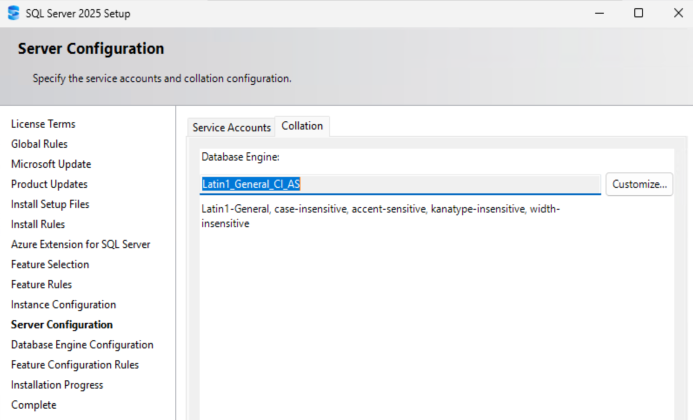
Trimble Monitoring highly recommends using the Latin1_General_CI_AS collation for the server, as it has been thoroughly tested and proven to work reliably.
Please visit https://www.microsoft.com/sql-server/sql-server-downloads to download the appropriate SQL Server version (Standard, Enterprise or Express Edition).
SQL Server 2025 Express
While SQL Server 2025 Express includes a notable increase in capacity compared to previous versions, it remains a lightweight database engine designed for small-scale applications and development use.
The most significant change in the 2025 edition is a five-fold increase in maximum database size. However, the strict limits on CPU and RAM usage remain in place, guiding larger or more demanding workloads toward the Standard edition.
Core Hardware & Capacity Limits
The table below outlines the key limitations in Express compared to the greater scalability offered by Standard.
| Feature |
SQL Server 2025 Express |
SQL Server 2025 Standard |
|---|---|---|
|
Max Database Size |
50 GB (up from 10 GB in previous versions) |
524 PB (effectively unlimited) |
|
Max Compute (CPU) |
Lesser of 1 socket or 4 cores |
Lesser of 4 sockets or 32 Cores |
|
Max RAM (Buffer Pool) |
~1.4 GB (1,410 MB) |
256 GB |
|
Columnstore Cache |
352 MB |
32 GB |
Key Feature Limitations
In addition to hardware restrictions, SQL Server Express does not include certain automation and high-availability capabilities required for mission-critical production environments.
-
No SQL Server Agent: Express cannot natively run scheduled jobs (e.g. backups, index maintenance, or automated scripts) natively. Administrators must use workarounds like Windows Task Scheduler with SQLCMD to implement automation.
-
High Availability (HA): Express does not support Always On Availability Groups or Failover Clustering. While Standard is limited compared to Enterprise (supporting only 2-node Basic AGs), Express provides no built-in failover redundancy.
-
Limited Performance Tools: Express excludes access to the SQL Server Profiler and the Database Engine Tuning Advisor, making advanced query diagnostics and optimization more difficult.
See Microsoft - Editions and supported features of SQL Server 2025 for more information.
Installation SQL Server 2025
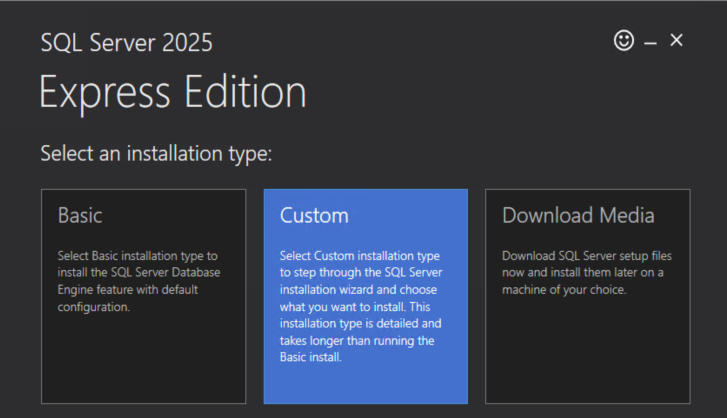
Open the setup and select Custom installation:
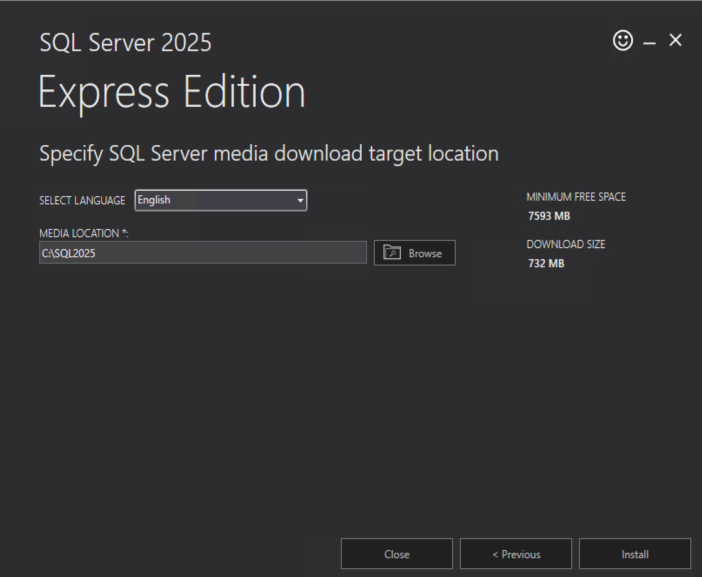
In the following dialog click install:
Then select New SQL Server standalone installation:
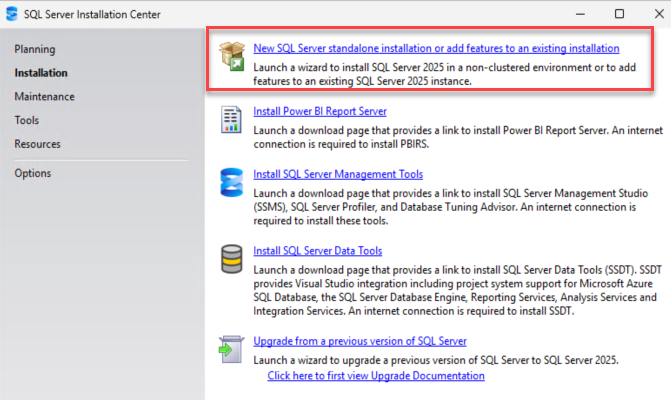
Accept the license terms and decide if you want to use Microsoft to check for updates (recommended).
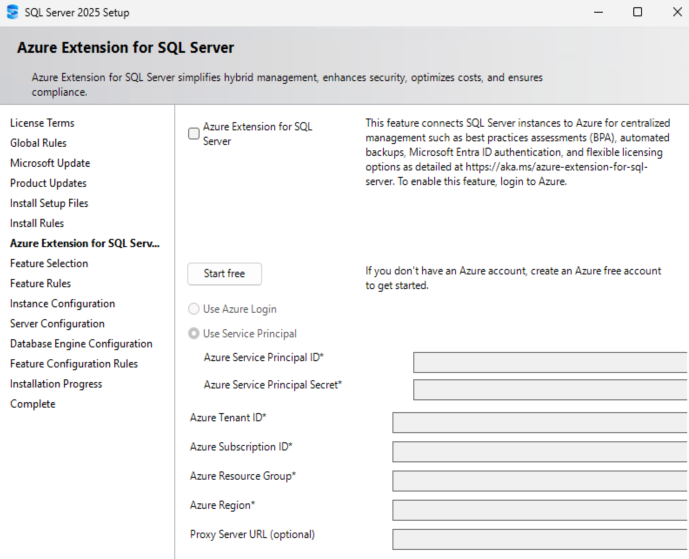
Decide whether to use the Azure Extension - note that it is not required for T4DSe.
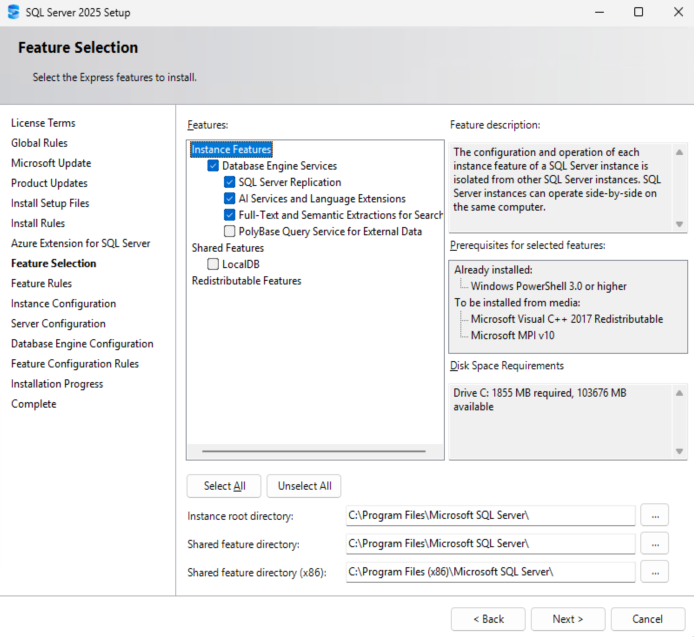
In Feature Selection the Database Engine Service is needed:
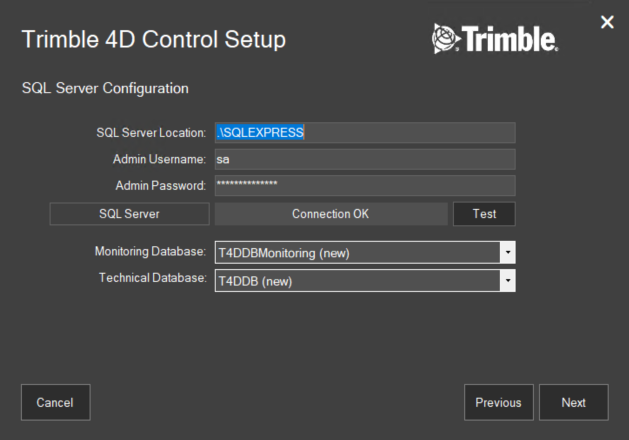
Use the Default instance name, or choose a Named instance (recommended if you do not plan to upgrade to SQL Server Standard later). Remember the instance name as it is important for the T4D installation later:
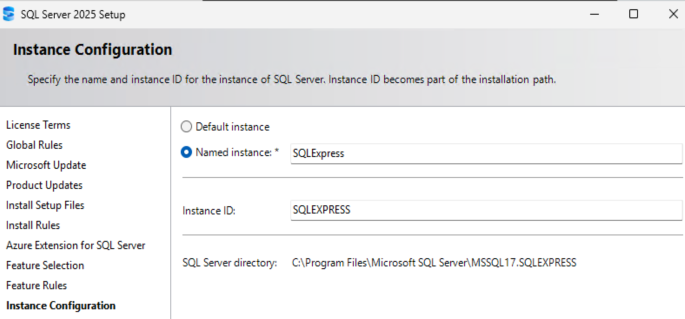
If you use Default instance and have a SQLExpress version it is automatically entered in the installation of T4D:
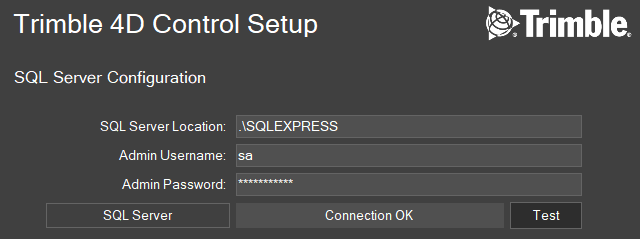
The default SQL Standard Installation doesn't name the SQL Instance. So the server location contains just the computer name or IP address.
In the Collation tab of the Server Configuration, make sure that the collation is set to Latin1_General_CI_AS:
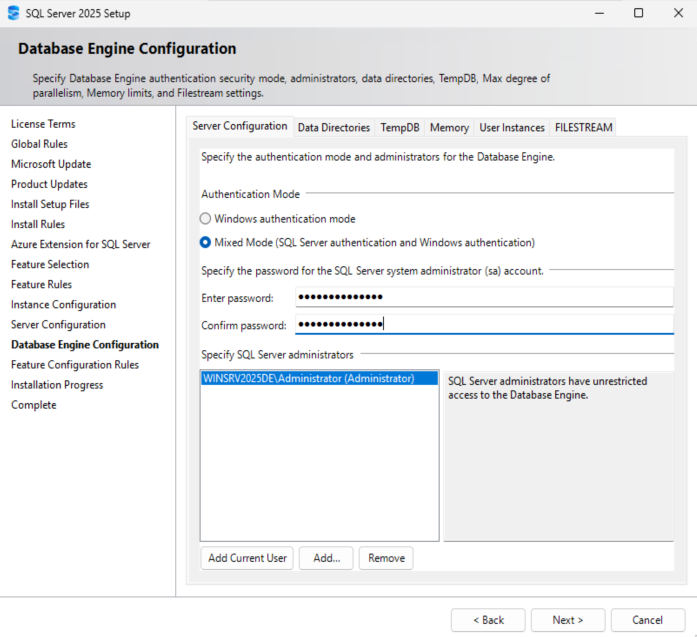
In Database Engine Configuration, enable Mixed Mode, enter a secure password, and note this password, as it is needed for the T4D installation:
It is recommended that the current user has access to the databases in SQL Server Management Studio, though this is not required to run T4D.
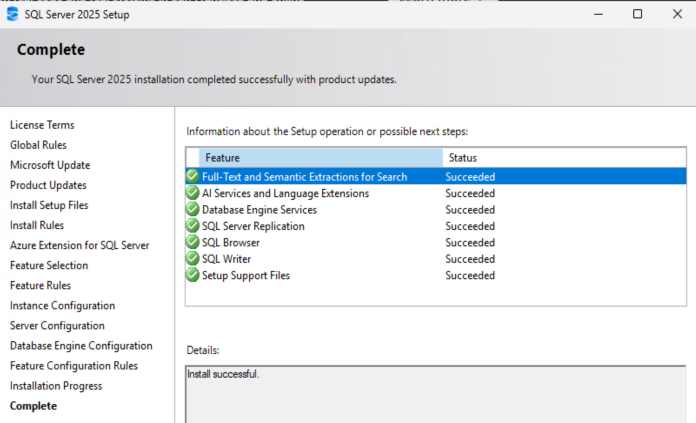
Then the SQL Server is installed, this might take a couple of minutes. Finally the following dialog informs on successful installation:
Note that both the SQL Server password and the instance name are required for the T4D installation:
SQL Server Version Update
Follow the steps in this chapter to upgrade an existing SQL Server installation to SQL Server 2025.
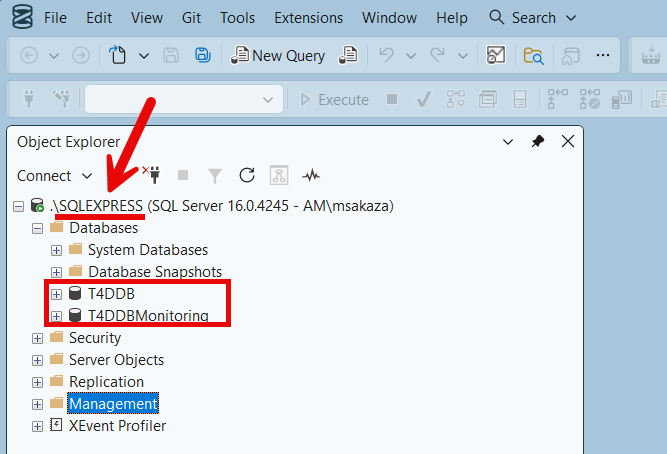
Before starting the update, identify the SQL Instance name that contains T4D Databases. This is done connecting to the Database using SQL Server Management Studio.
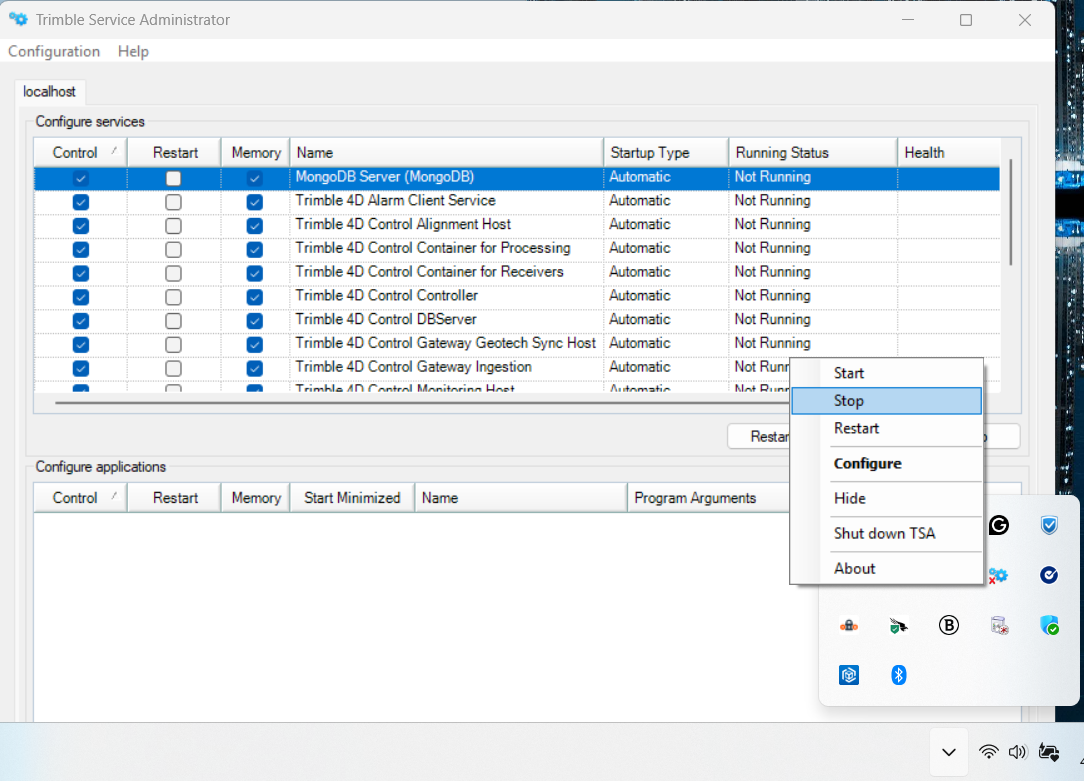
In Trimble Service Administrator (TSA), for each T4D-related service, clear (uncheck) the Restart option:
Select the Custom installation option before proceeding to the next step:
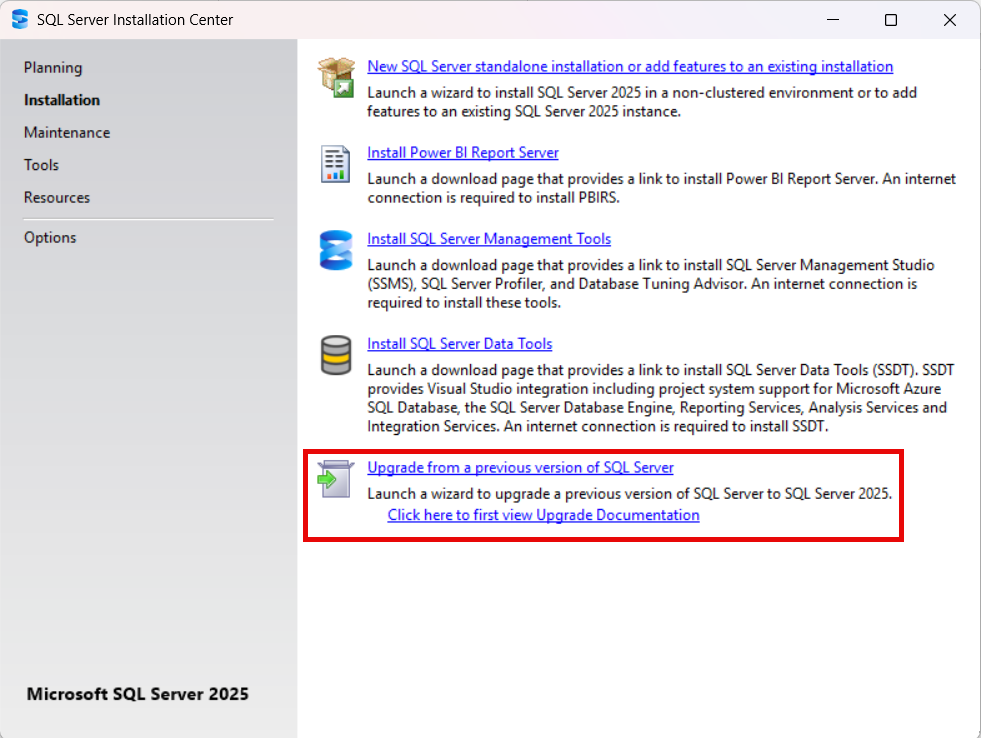
In the SQL Server Installation Center, select Upgrade from a previous version of SQL Server to launch the upgrade wizard:
Review and accept the license terms, then choose whether to enable Microsoft Update to check for product updates (recommended).
Select the SQL Server instance hosting the T4D databases to upgrade, then click Next:
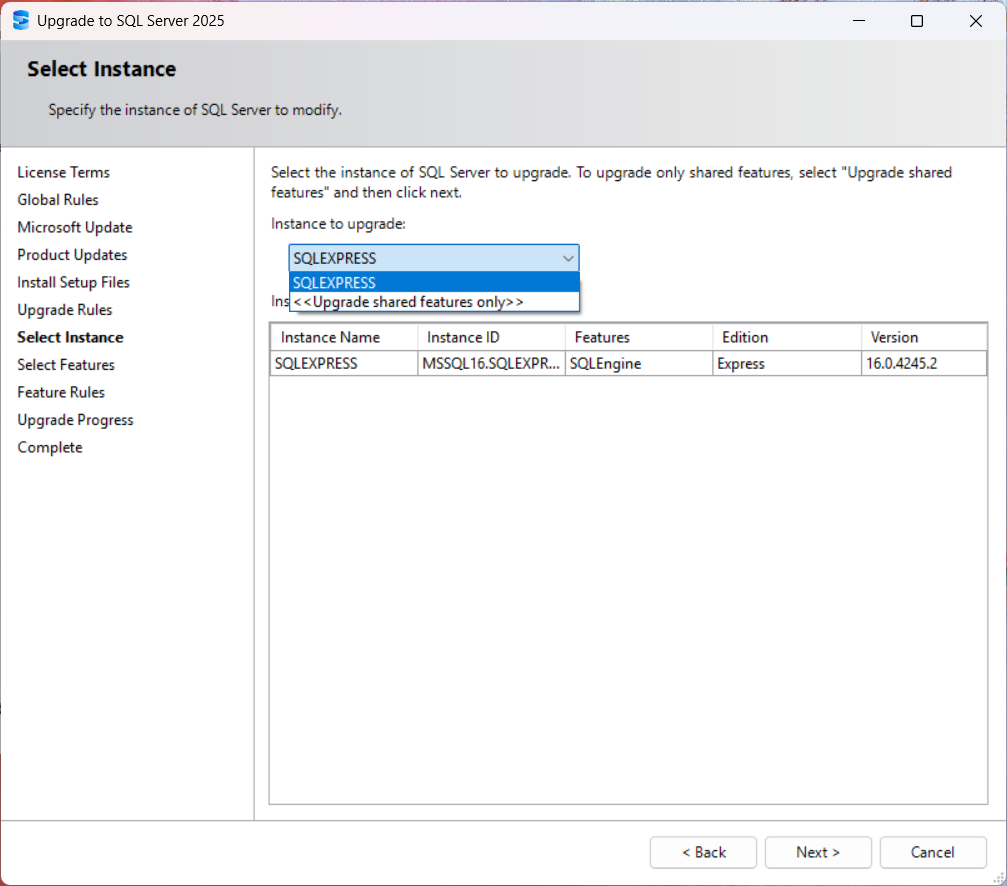
After the installation has finished, click Close to exit the Installation Wizard.
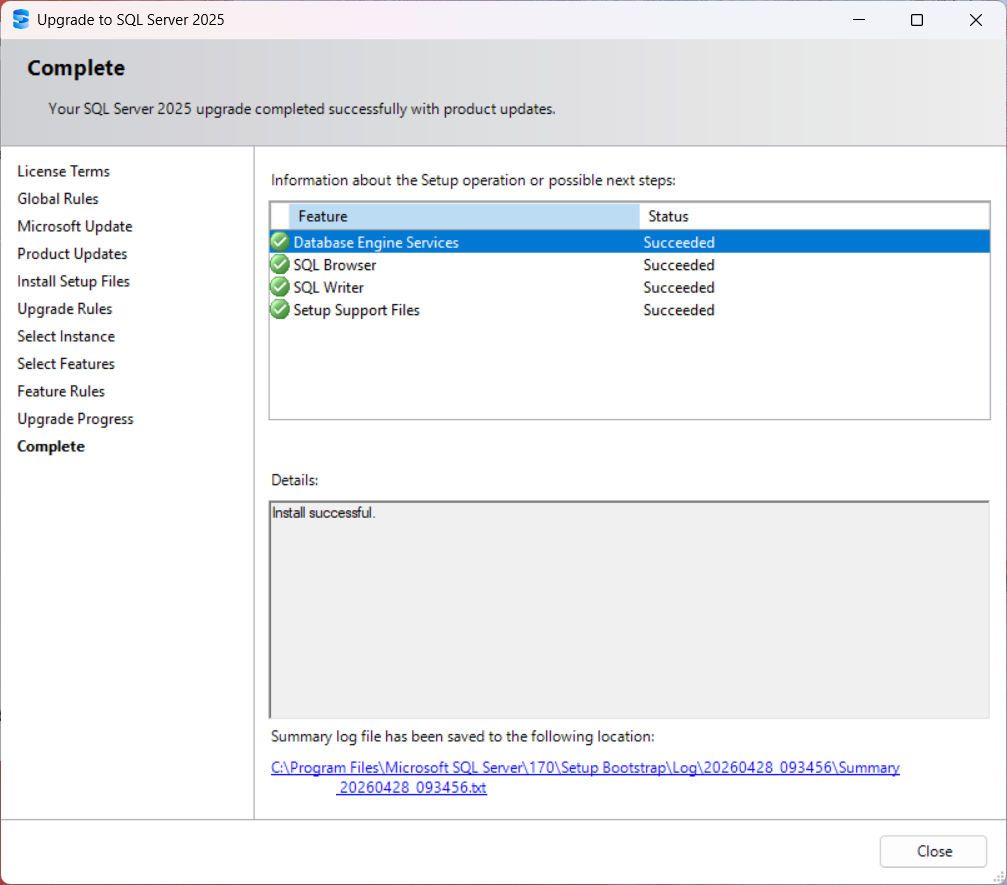
Start the services and TSA and check the restart boxes to resume the system.
Download and install SQL Server Management Studio
It is recommended to additionally install SQL Server Management Studio to enable database backups. Click on Install SQL Server Management Tools:
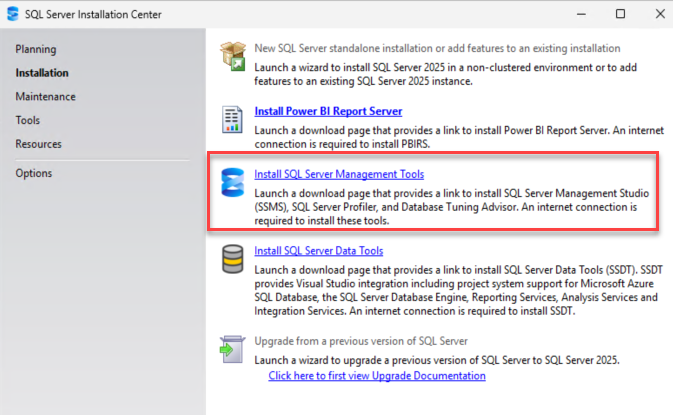
Here you are directed to Install SQL Server Management Studio and must install Visual Studio Installer first.
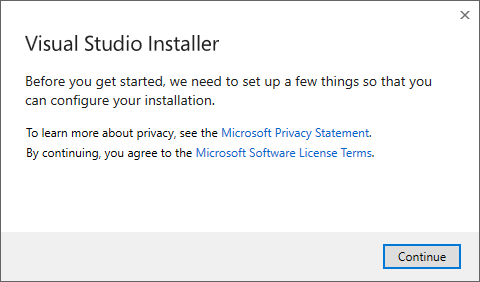
In the SQL Server Management Studio interface, select Install, then in the next dialog choose Launch:
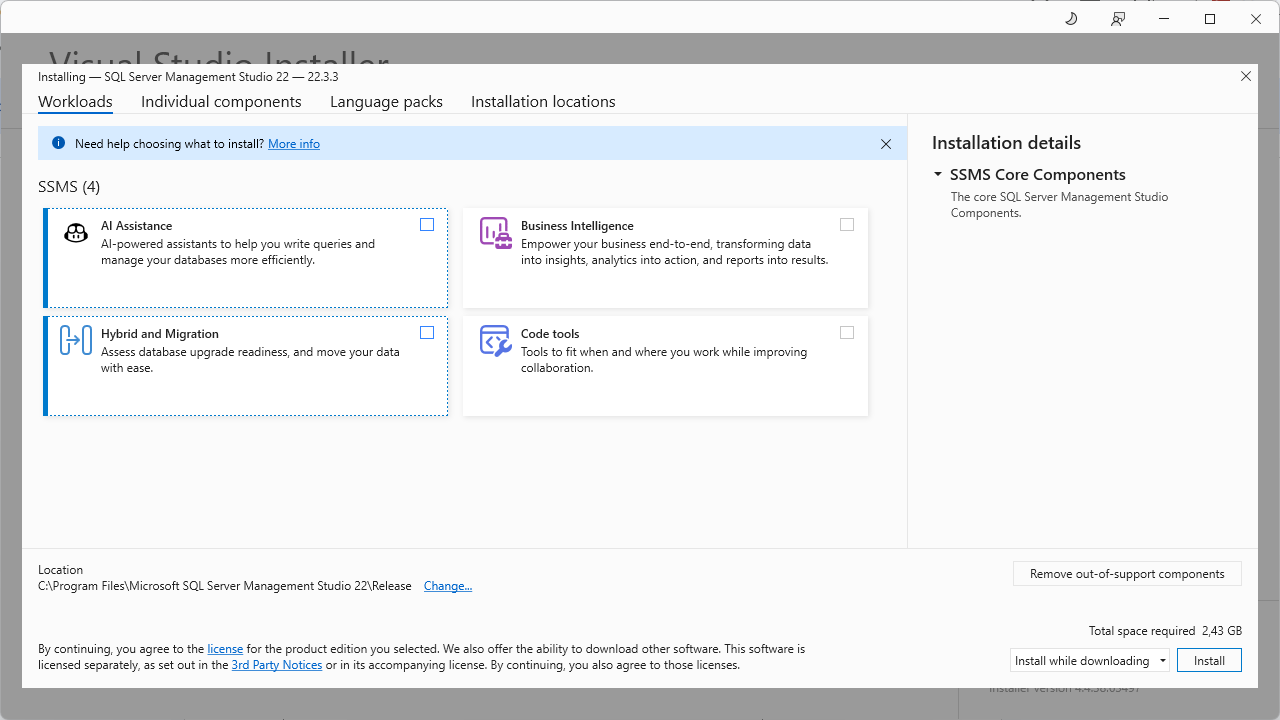
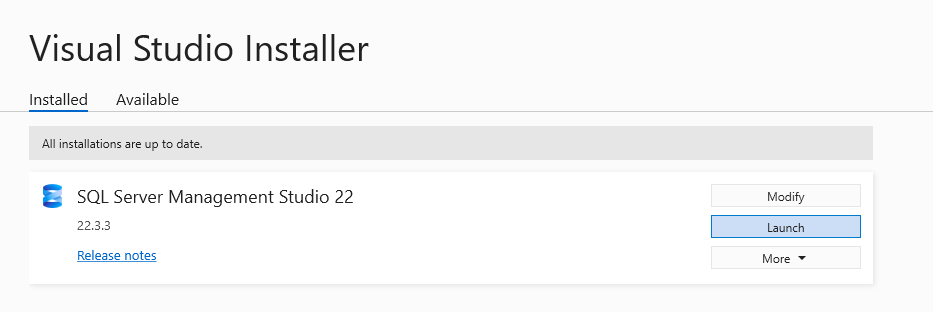
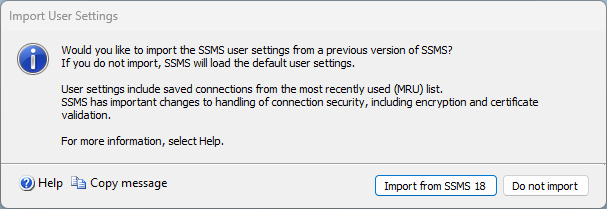
If you wish to retain your existing configuration, proceed with importing the previous settings:
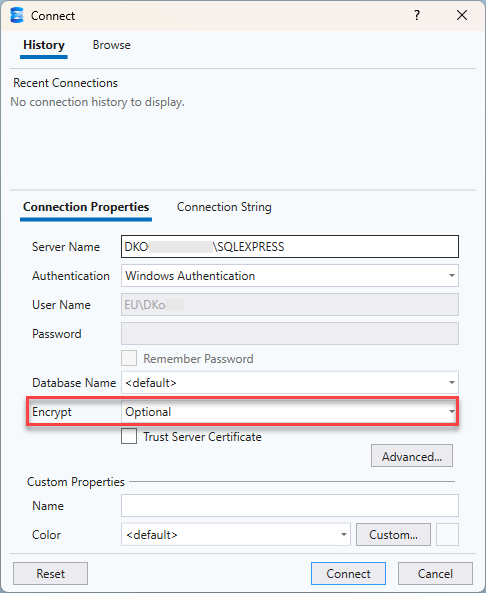
With SQL Server Management Studio 22, it is important to set Encrypt to Optional:
Additional advanced notes
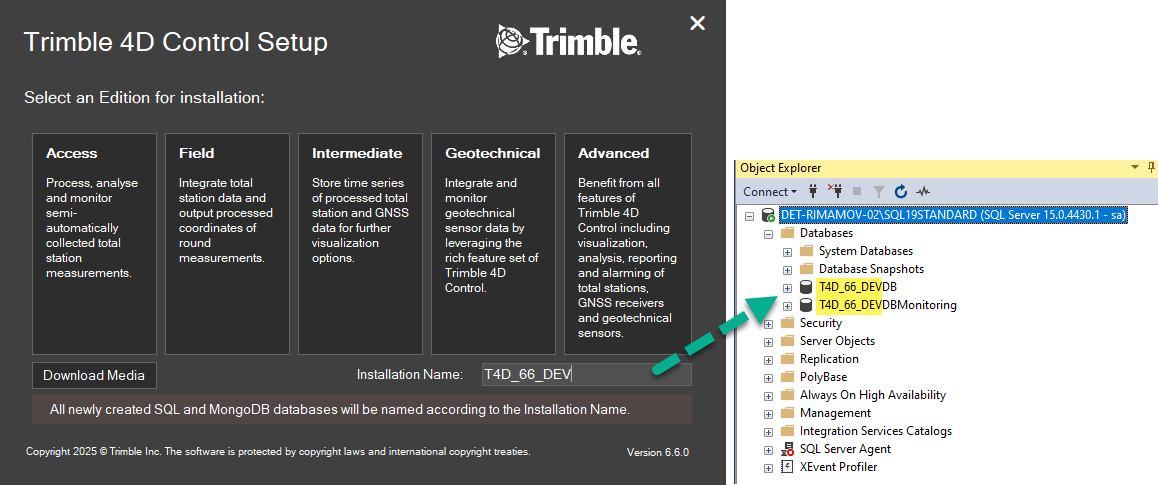
If another database name than the default database should be used (T4DDB and T4DDBMonitoring), it is possible to define a database name in the installation: